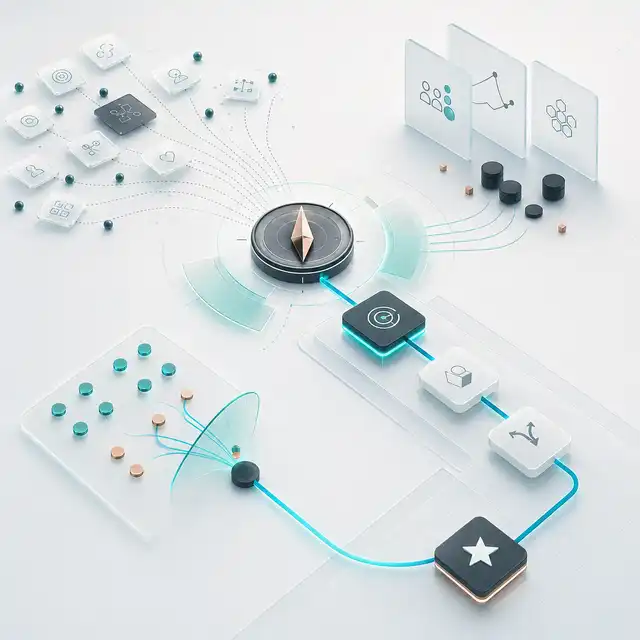
Product ownership that connects behavior, value, and delivery

Product ideas, user behavior, and business goals become a clear product model. Less feature traffic, better decisions, and one shared picture for product, design, and engineering.

From problem, signal, and value to the next move visual
Product work

Product work

From problem, signal, and value to the next move

Product work is shaped so learning, delivery, and direction reinforce each other instead of blocking each other.

Signals
Problem framing
Direction

Problem

01

Sharpen the question before adding scope

Signal

02

Make learning and prioritization credible

Value

03

Cut the next move for visible impact

Good fit

Good fit

  • you want product decisions tied more closely to behavior, value, and delivery
  • you need sharper prioritization without reducing product work to backlog administration
  • you want product, design, and engineering aligned around one shared picture earlier

Not a fit

Not a fit

  • you only need someone to sort tickets and manage stakeholder requests
  • you want to push features without clarifying the problem, audience, or impact
  • you intentionally separate product work from technical reality and delivery

How product ownership is shaped

Clear product logic, shared decisions, and real learning in production instead of backlog administration

Step 1

01

From Why to leverage

Start with the problem, user behavior, and business value before debating features or backlog slots.

Step 2

02

Product model over feature traffic

Connect direction, prioritization, and decision logic so product work creates learning progress instead of busy backlog management.

Step 3

03

A shared What

Bring design and engineering into one shared product picture, including data, interfaces, and operational reality.

Step 4

04

Learning in production

Use feedback, experiments, and delivery signals so product decisions improve inside the real system, not only in workshops.
Concrete value

What that feels like in practice

Product work becomes sharper, more honest, and more effective because it is tied back to behavior, value, and delivery.

Built from the problem outward

Product work is not compressed into features before it is clear what behavior should change and why that matters commercially.

No handover product work

Product, design, and engineering develop one shared picture of the what instead of throwing work over fences.

Impact over output

The work makes visible which decisions create actual value instead of counting delivery activity as if it were proof of progress.

Multi-level value logic

Usage chains and system effects matter because the real leverage rarely sits on the most obvious screen.

Continuous learning

Experiments, feedback, and delivery data become a live learning loop, not a ritual next to the real work.

Ready actually means ready

Work enters the flow only when value, quality expectations, data, interfaces, and operations are clear enough to move without hidden friction.

Selected contexts

Selected contexts

A selection of companies and product environments where product and delivery logic had to be built, reset, or prepared for growth.

If product ideas, user behavior, and delivery do not yet reinforce each other, we can quickly check the right entry point.

Check product fit